Cryogenic-Mobility
Cryo tank systems enable long-range, zero-emission transport with LH₂.
Making Hydrogen Mobility a Reality
SAG leads the way in safe, efficient, and scalable LH₂ tank systems for zero-emission transport.
Cryogenic mobility is no longer a vision—it’s on the road. SAG is the technology leader in cryogenic liquid hydrogen (LH₂) storage systems for commercial vehicles. Our vacuum-insulated, double-walled stainless-steel tanks are engineered for extreme thermal performance, lightweight integration, and safety at scale.
We are proud partners in the global shift toward clean, hydrogen-powered mobility—supporting OEMs in the development and rollout of next-generation long-haul trucks and heavy-duty transport systems.
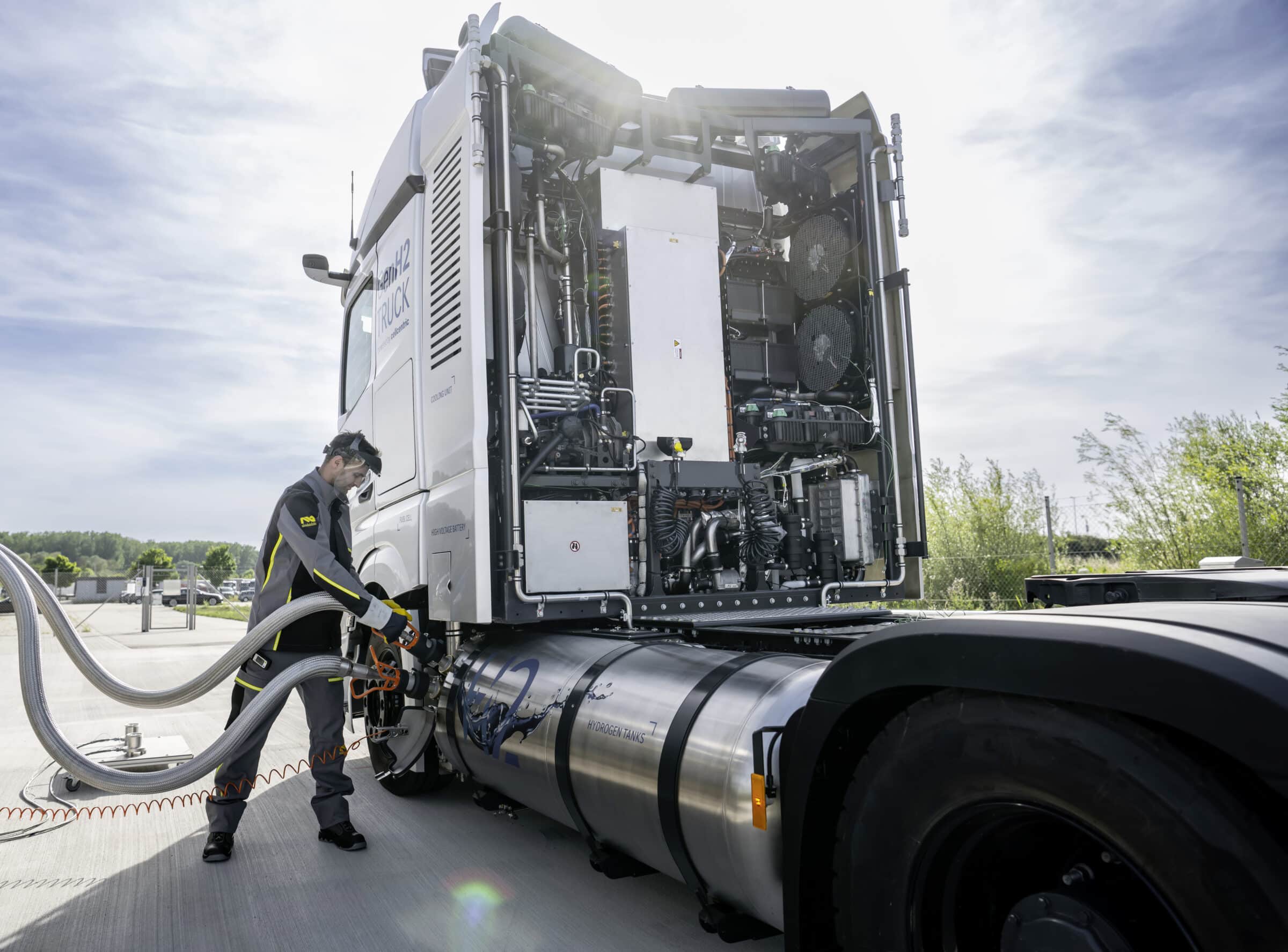


Cryogenic tank system for LH2
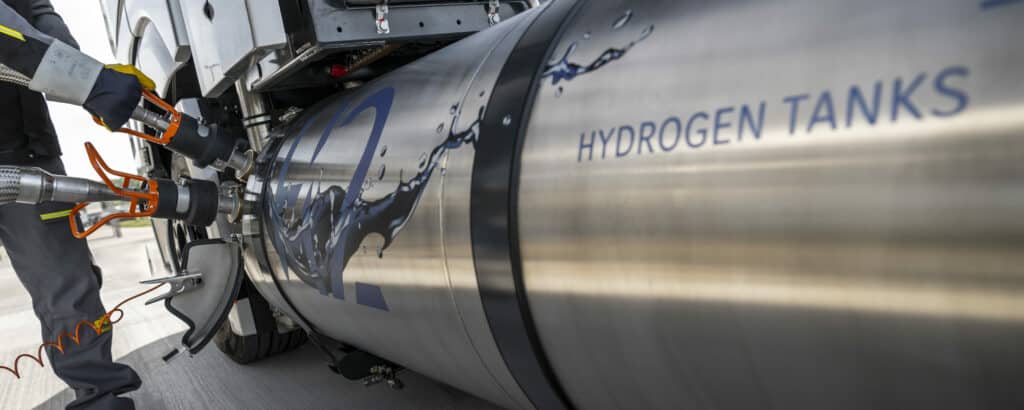
Minus 253 degrees Celsius and high pressure are constantly required to store hydrogen in a liquid state and make it available as a climate-friendly fuel alternative with maximum energy density. The R&D experts at the SAG Group have succeeded in developing a tank solution that meets these extreme requirements and can make a significant contribution to CO2-emission-free truck traffic. The system meets the difficult technical requirements and has already proven itself in test runs thanks to its compact size and high reliability. Recently, five hydrogen trucks with SAG cryogenic tank systems have been on the road in Europe for further practical testing in real logistics operations.
Hydrogen is regarded as the fuel of the future on the road to emission-free mobility. Thanks to its high energy density and short refueling times, liquid hydrogen in particular is a promising alternative to diesel and experts assume that LH2 in particular will play a decisive role in achieving EU climate targets in truck transport in the future. Thanks to its high energy density, liquid hydrogen (LH2) is ideal for use over long distances.
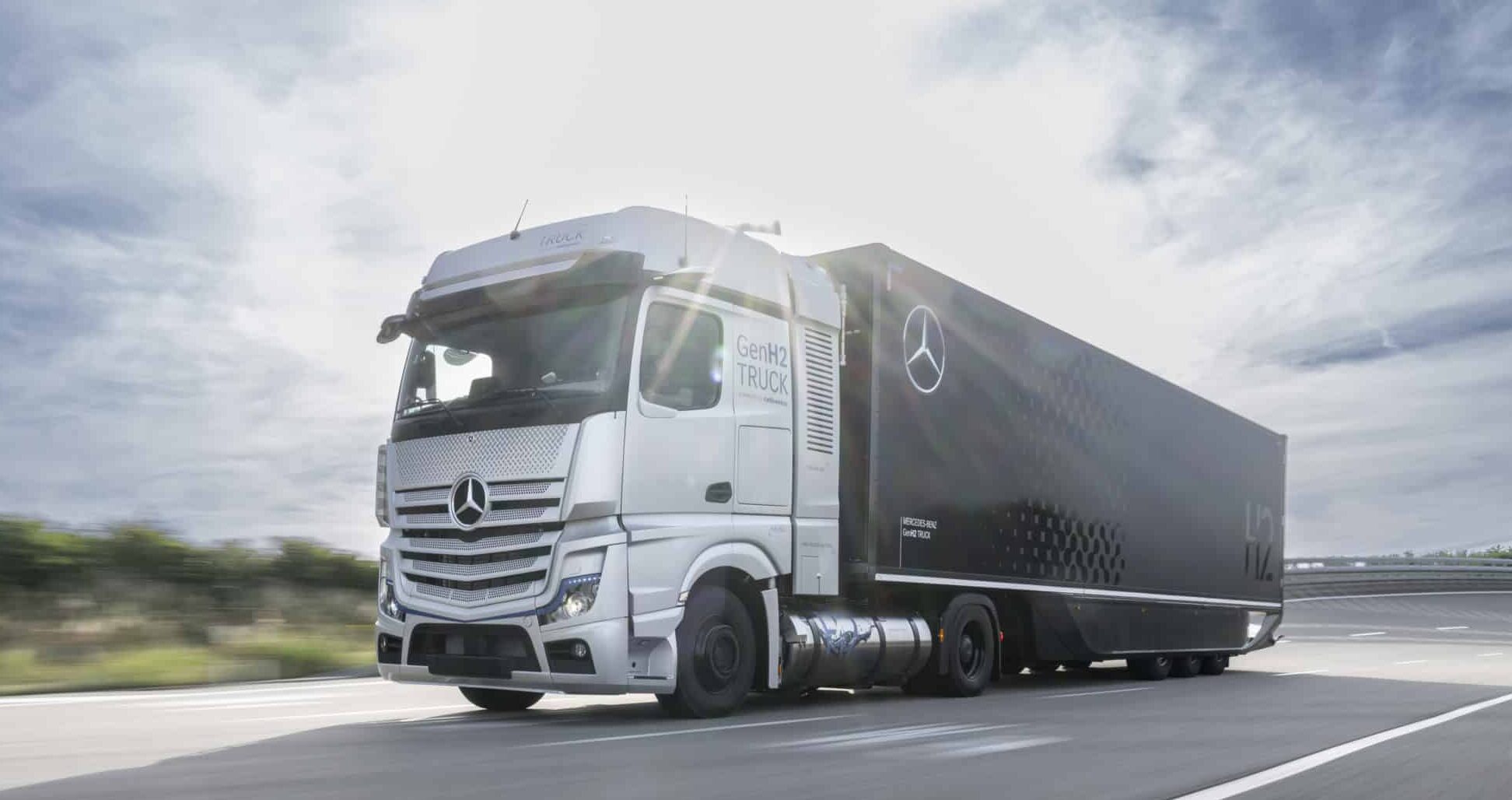
With its cryogenic tank system for LH2, the SAG Group is providing an important building block on the road to emission-free transportation. An innovative development that is already being used in the Mercedes Benz GenH2 truck. The stainless steel tank system consists of two interlocking, interconnected tubes that are vacuum-insulated and each have a capacity of 44 kilograms of LH2. This quantity enables a range of more than 1000 km. A special valve system designed for extremely low temperatures enables safe refueling and a reliable supply of hydrogen to the fuel cell.
What Powers Cryogenic Mobility at SAG
Leading-edge storage systems engineered for the demands of tomorrow.
Cryogenic LH₂ Tank Systems
Store more energy, go further, and refuel faster.
Built-in Safety, Certified for Use
Proven under pressure—and extreme cold.
Development Partner from Start to Scale
From idea to prototype to full production.
The SAG Advantage in Cryogenic Mobility
Proven technology, production-ready scale, and unmatched hydrogen expertise
Technology Leadership
SAG is a pioneer in cryogenic hydrogen storage. We were the first to bring vacuum-insulated LH₂ tanks into automotive serial development and have already logged thousands of kilometers in real-world operations.
Performance Meets Practicality
LH₂ systems by SAG offer 1.5 kWh/L volumetric energy density—superior to alternative fuels and high-pressure tanks. Refuelling takes less than 10 minutes for a 1000+ km range, making it ideal for heavy-duty, long-distance transport.
Built for OEM Integration
Our tanks are designed to fit within the real constraints of vehicle platforms, balancing compact design with maximum storage. We work closely with your engineering team to ensure seamless implementation.
Future-Proof & Scalable
Whether you’re developing a pilot project or scaling to full fleet integration, SAG’s production capacity and cryogenic know-how ensure you’re ready for the future of zero-emission transport.
Product finder
Discover our products and solutions
Contact
Get in touch
- We will get back to you promptly
"*" indicates required fields